
Lindhorst, S., Budke, L., Beaman, R. J., Eisermann, J. O., Hübscher, C., Lahajnar, N., Lüdmann, T., Webster, J. M., & Betzler, C. (2025).
Deep-water canyon–channel systems of the Queensland Plateau, Northeast Australia. Marine Geology, 491, 107678.
https://doi.org/10.1016/j.margeo.2025.107678
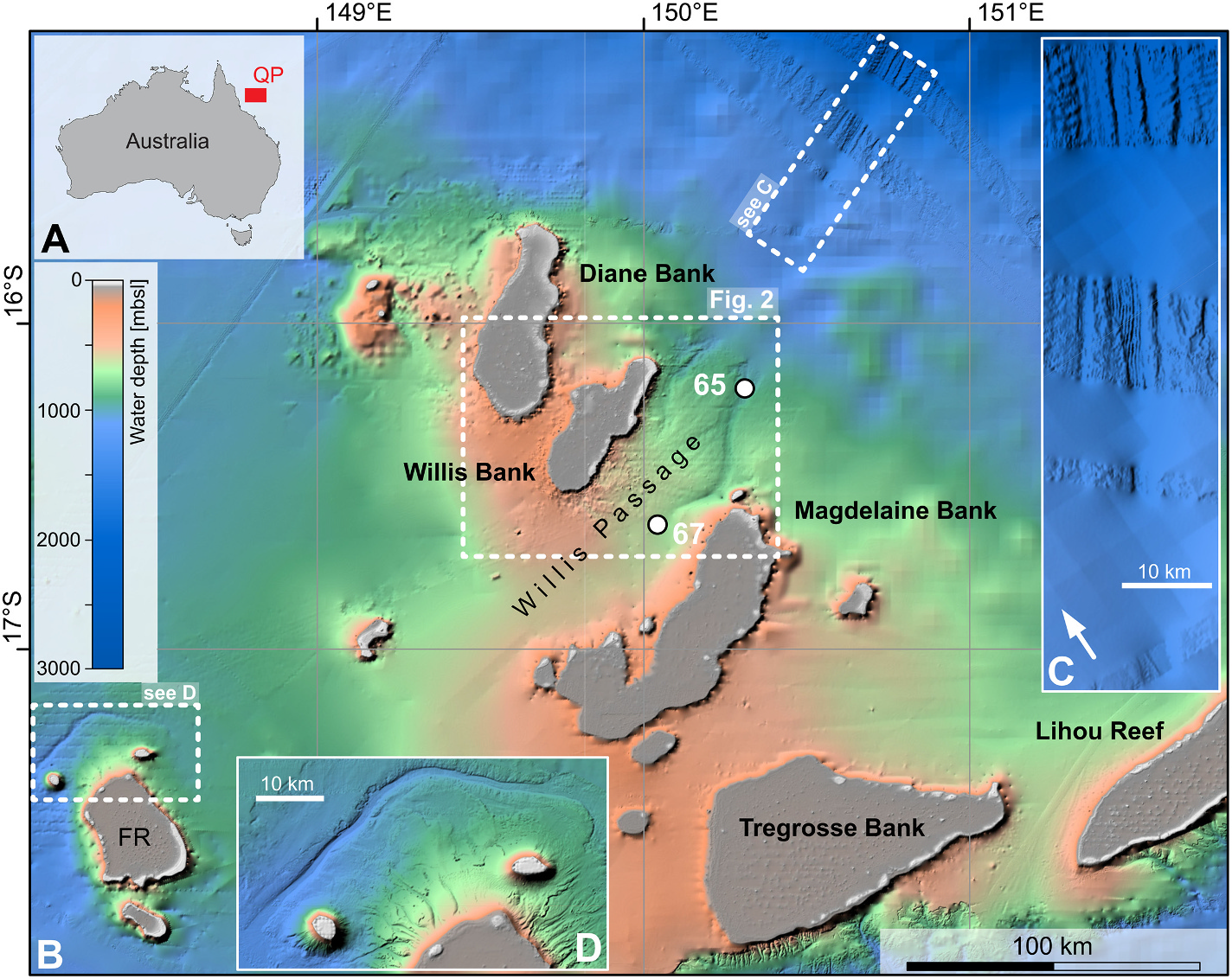
A new study of the Queensland Plateau in the Coral Sea led by Geocoastal Research Group (GRG) collaborator Sebastian Lindhorst (University of Hamburg), reveals a hidden network of deep-water canyons representing important sediment conduits, connecting platform-slope proximal depocenters with the deep ocean.
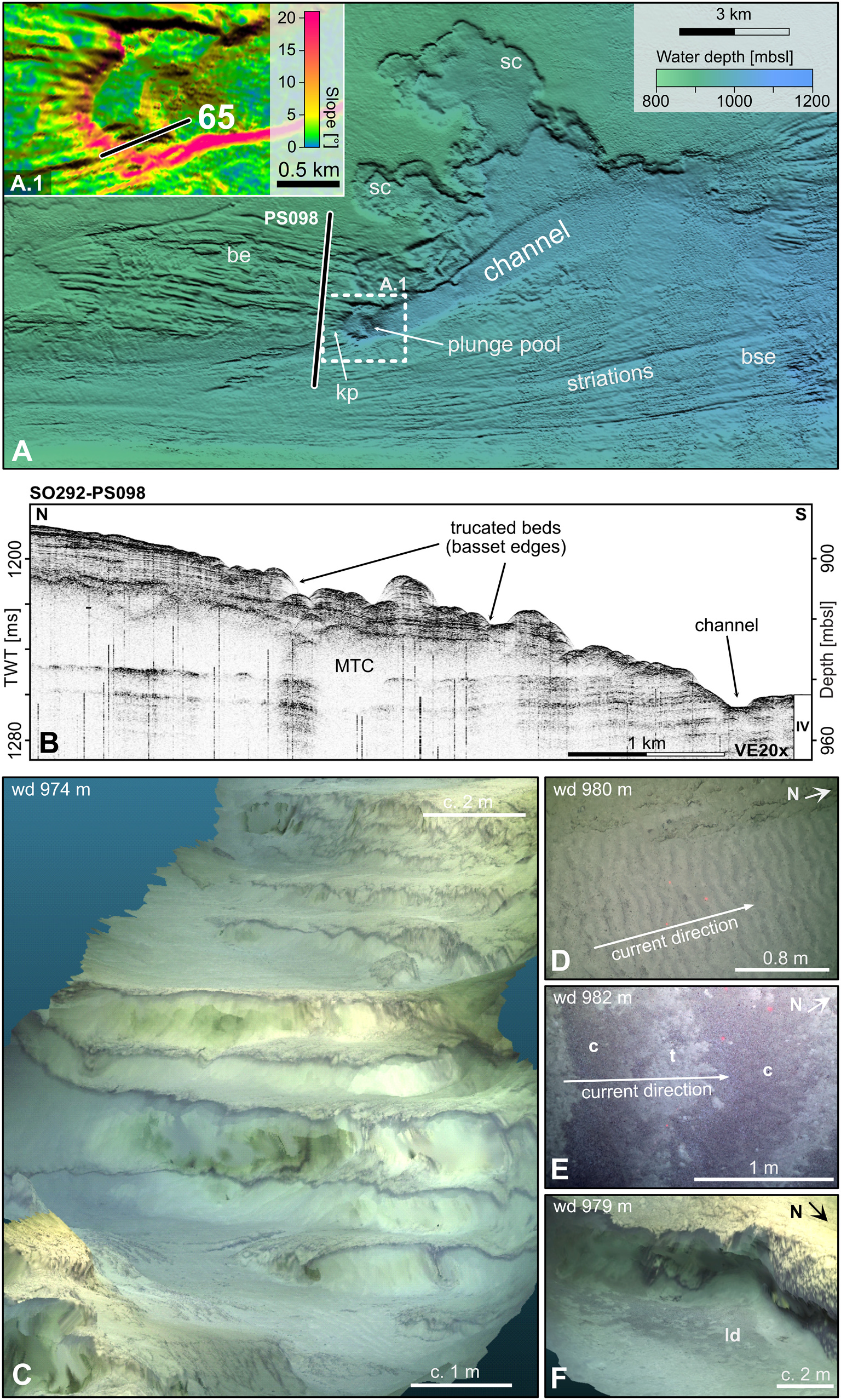
Drawing on high-resolution bathymetry, seismic profiles, and seafloor imagery from RV Sonne and RV Falkor cruises, the research documents an extensive canyon–channel system in the Willis Passage—a deep strait between Willis and Magdelaine Banks in the Coral Sea. Unlike most submarine canyons connected to continental slopes, these slope-detached canyons begin at depths greater than 500 m and extend for over 100 km across the plateau.

The findings show that these canyons were formed by sediment-laden bottom currents flowing eastward, counter to the dominant regional flow. These bottom currents likely arise from tidal pumping and current focusing around the high-relief carbonate banks—processes that intensified during glacial lowstands when sea levels were lower and inter-bank passages narrower.
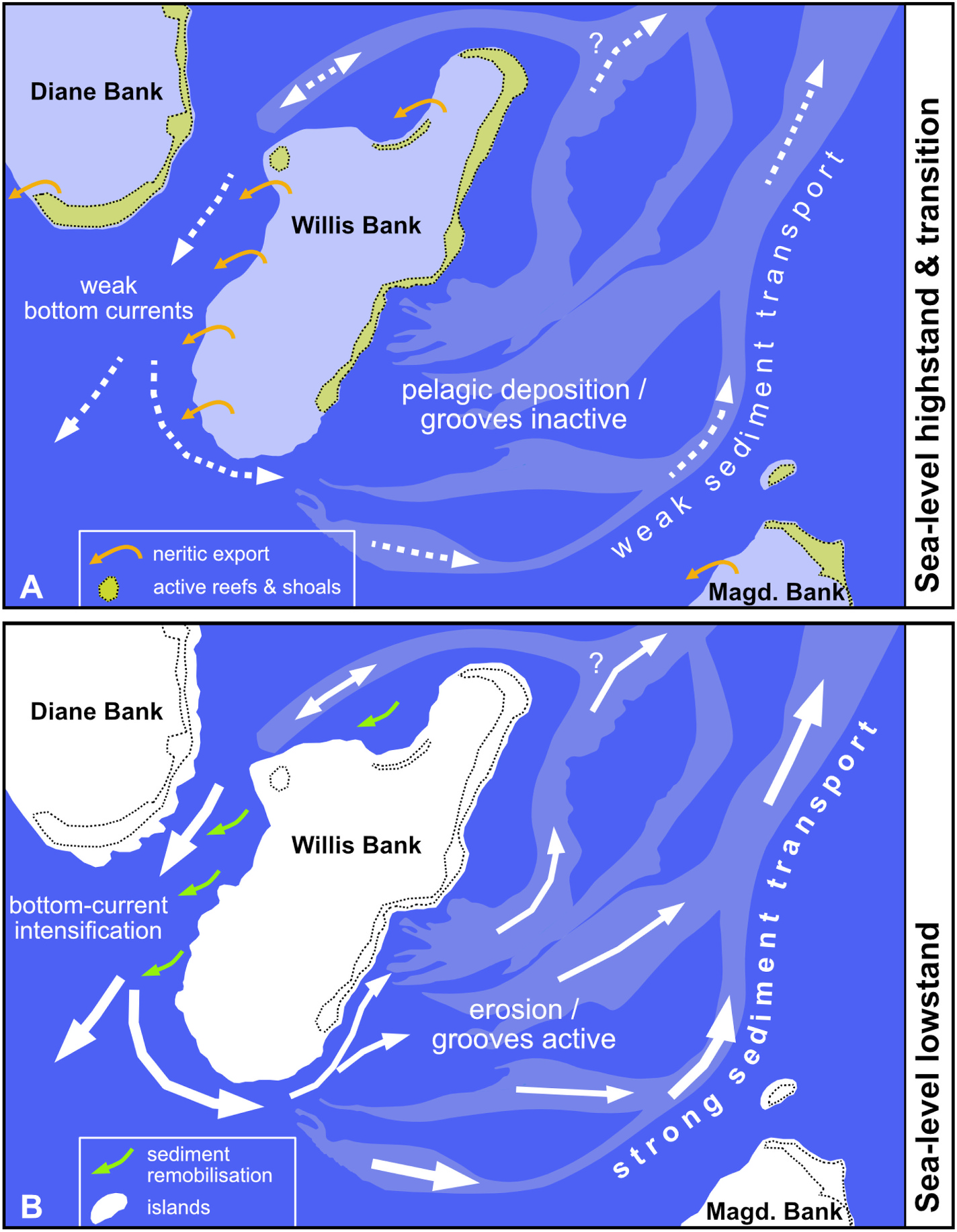
Seismic evidence of buried older canyon systems beneath the seafloor suggests that such sediment-routing networks have been active since at least the upper Miocene (~8 million years ago), responding to long-term shifts in ocean circulation and sea level.
The study identifies these slope-detached canyon systems as vital sediment conveyors, connecting shallow carbonate platforms with the deep ocean. They play a significant role in carbonate platform dismantling and long-term carbon export, underlining the contribution of bottom currents to shaping marine landscapes and regulating carbon burial through geological time.
This study represents another step in an exciting program of collaboration between the University of Sydney and numerous national (James Cook University) and international partners working together on a wealth of new data collected on recent research cruises on the RV Sonne (German DFG) and RV Falkor (Schmidt Ocean Institute) to investigate long term carbonate platform evolution, submarine landslides, and modern mesophotic reefs and the deeper water, unexplored seascapes of the Coral Sea.
Bravo Sebastian and the team!
Cheers
Jody
#MarineScienceSydneyUni
Read the full paper: Marine Geology, 491, 107678
Data: Available via PANGAEA (multibeam, Parasound, and CTD datasets)
 Geocoastal Research Group