

Please join me in congratulating GRG PhD student Madhavi Patterson and collaborator Dr. Pat Hutchings on the publication of their new paper in Coral Reefs:
Patterson, M. A., J. M. Webster, V. Chazottes, W. Renema, Z. Szilagyi & P. Hutchings (2025). “Net erosion and accretion of experimental blocks of Porites sp. skeleton deployed for 10.6 to 20.3 years at Lizard Island, northern Great Barrier Reef.” Coral Reefs. https://doi.org/10.1007/s00338-025-02759-x
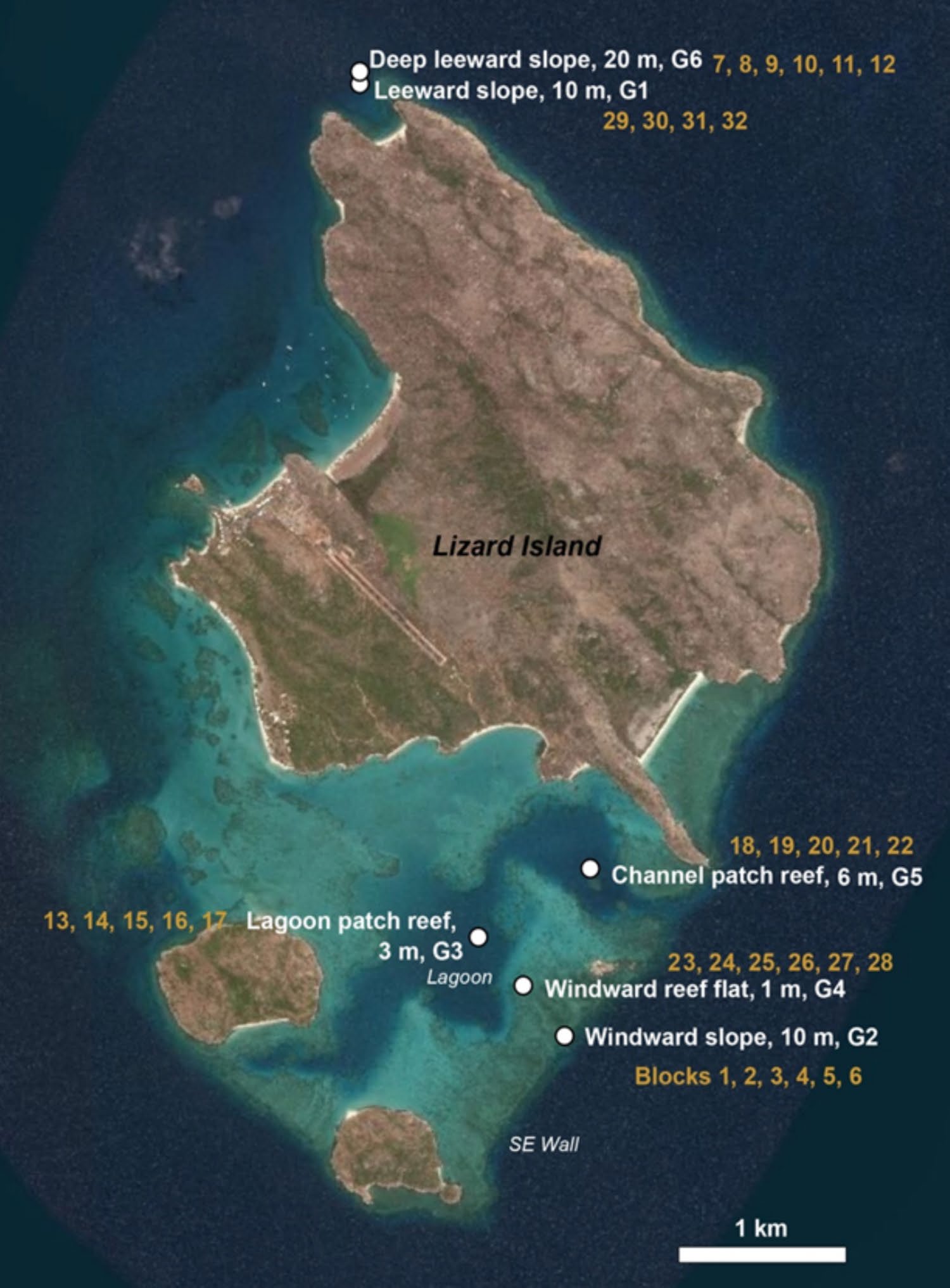
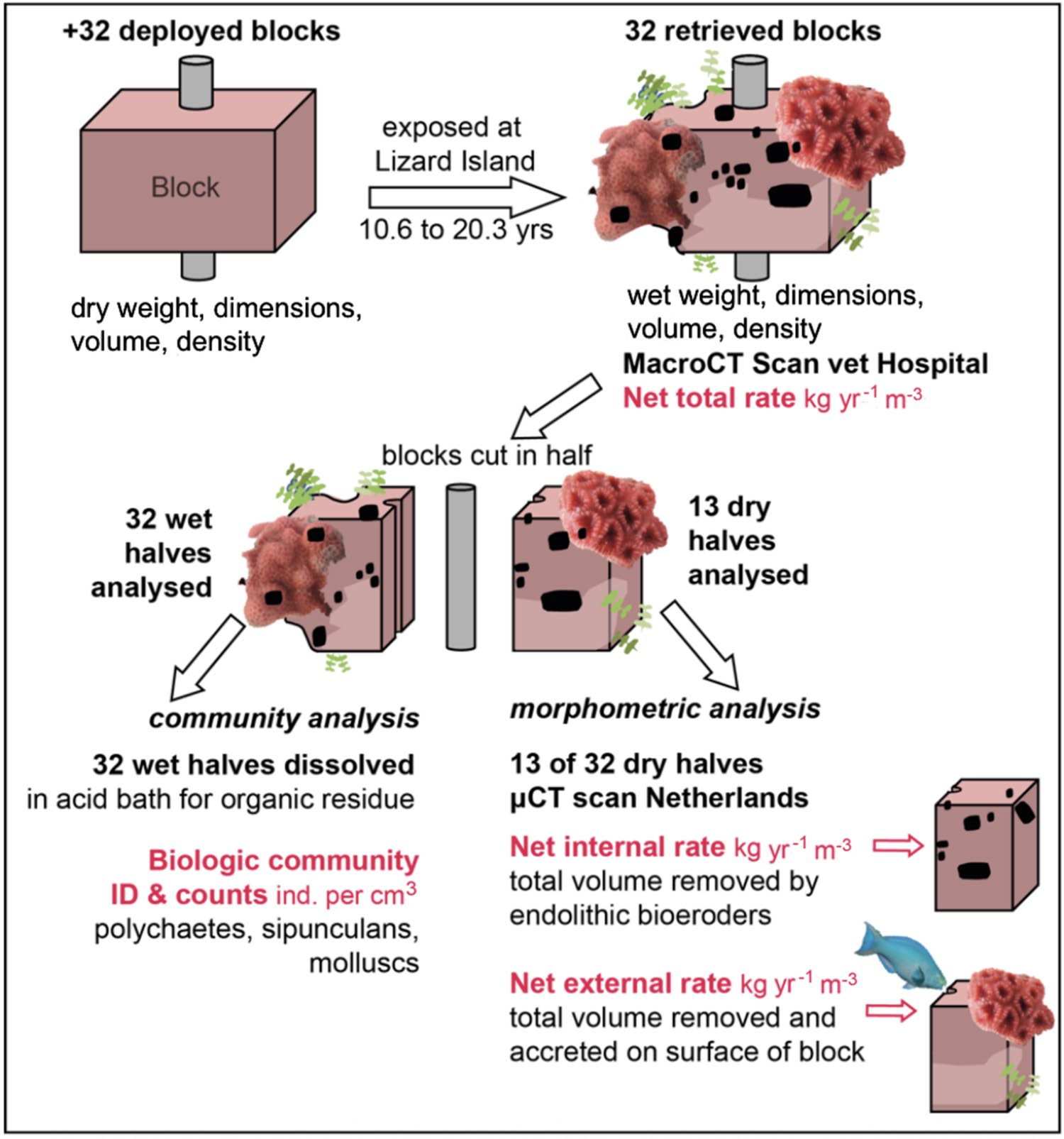
This landmark study presents the longest-running coral bioerosion experiment ever conducted on the Great Barrier Reef, using Porites skeleton blocks deployed for 10–20 years across six reef zones around Lizard Island. By combining micro-CT imaging with detailed biological analyses, the study provides unparalleled insight into how coral skeletons are broken down—or occasionally rebuilt—over decadal timescales.
Key findings include:
• Dominance of net erosion: 30 of 32 blocks lost carbonate overall, indicating that long-term erosion overwhelmingly exceeds accretion across most reef zones.
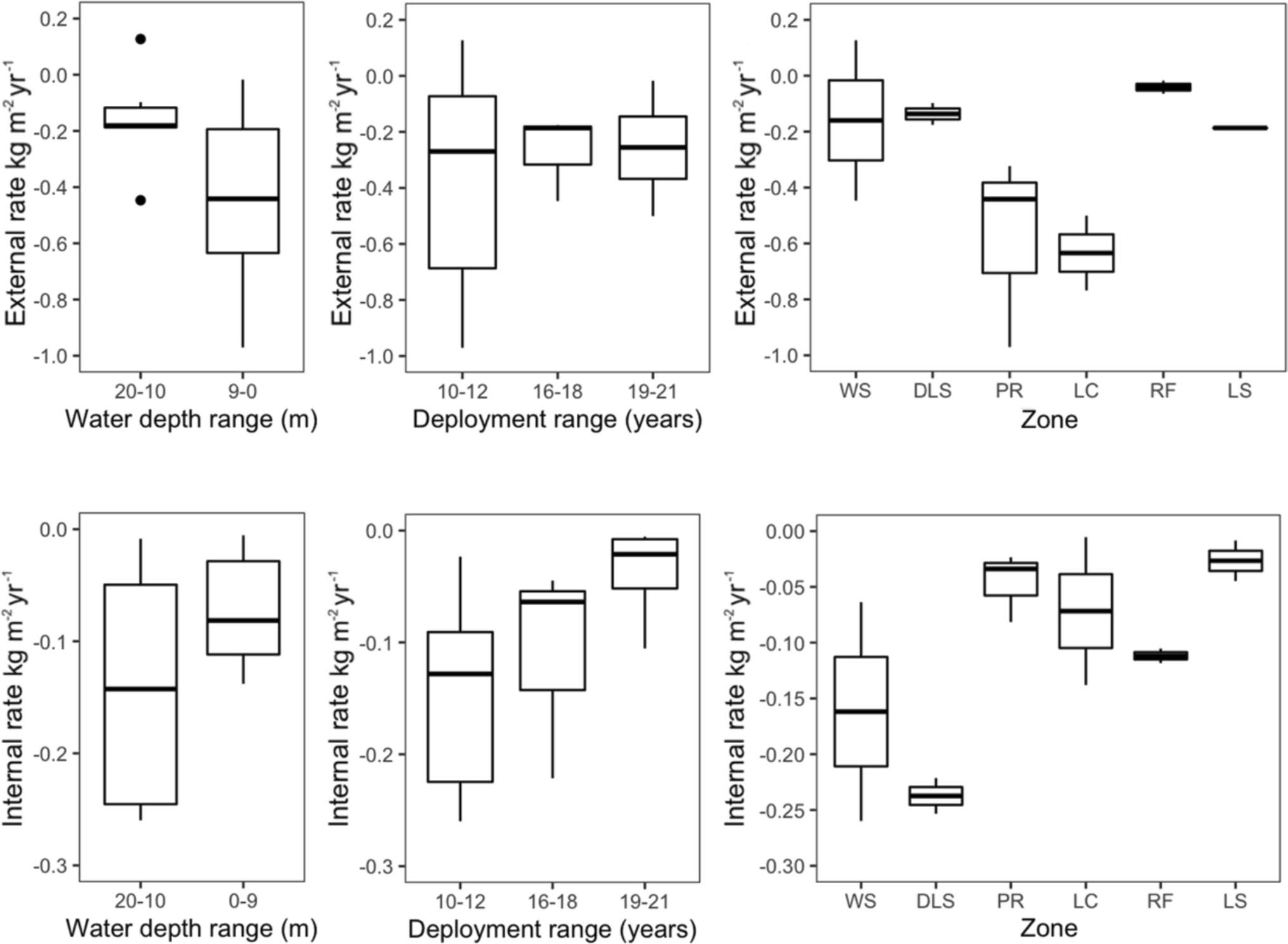
• Strong habitat control: Net external erosion was highest in lagoonal and channel patch reefs and lowest on the Windward reef flat, where shallow low-tide exposure restricts grazing.
• Balance of internal vs. external processes: External erosion (mainly grazing and physical abrasion) generally exceeded internal boring, except on the Windward flat and Deep leeward slope where both processes were nearly equivalent.
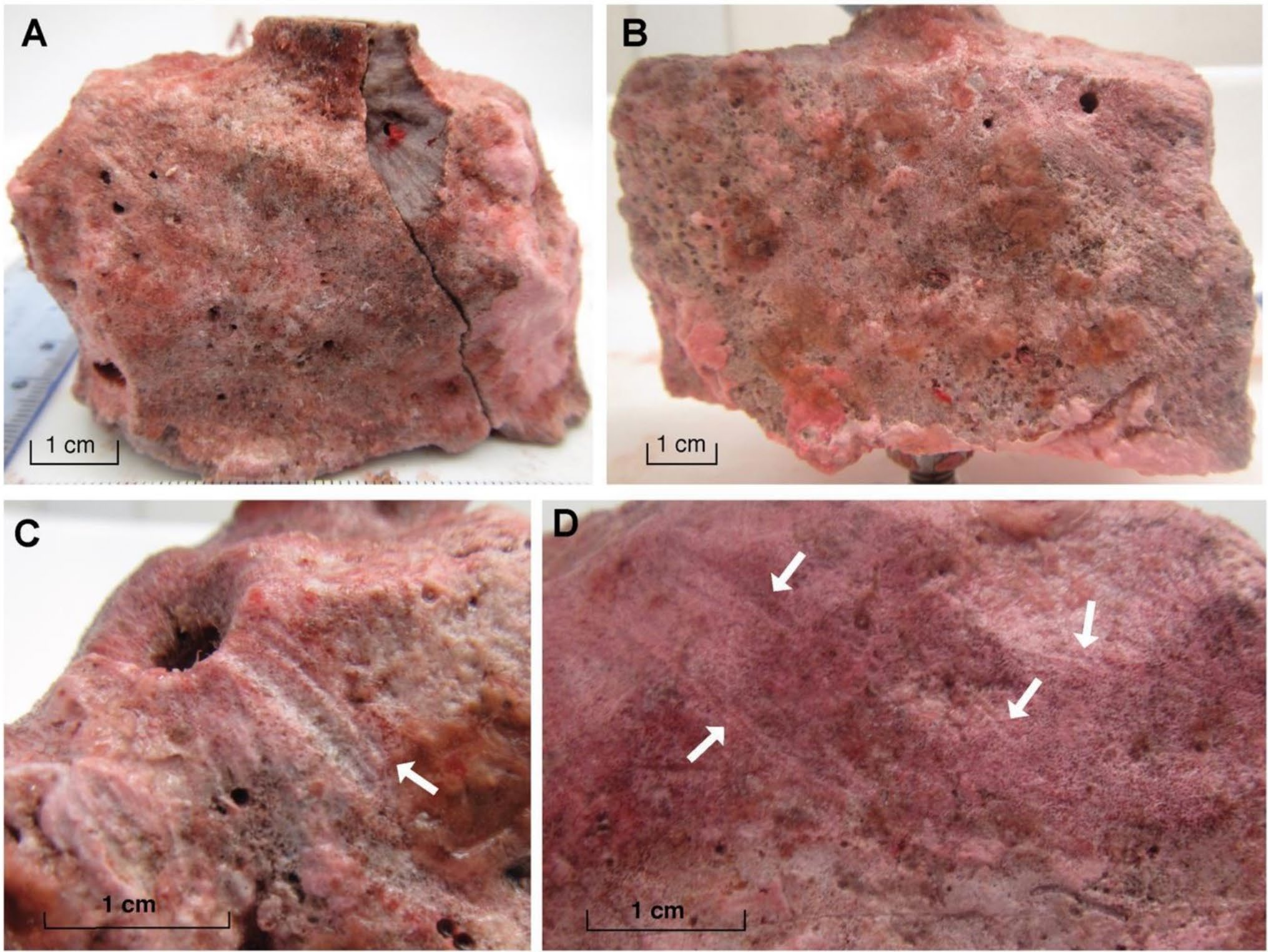
• Sparse coral recruitment: Despite deployment periods exceeding a decade, only four blocks supported living coral colonies, highlighting low long-term survivorship of recruits under recurrent disturbance.
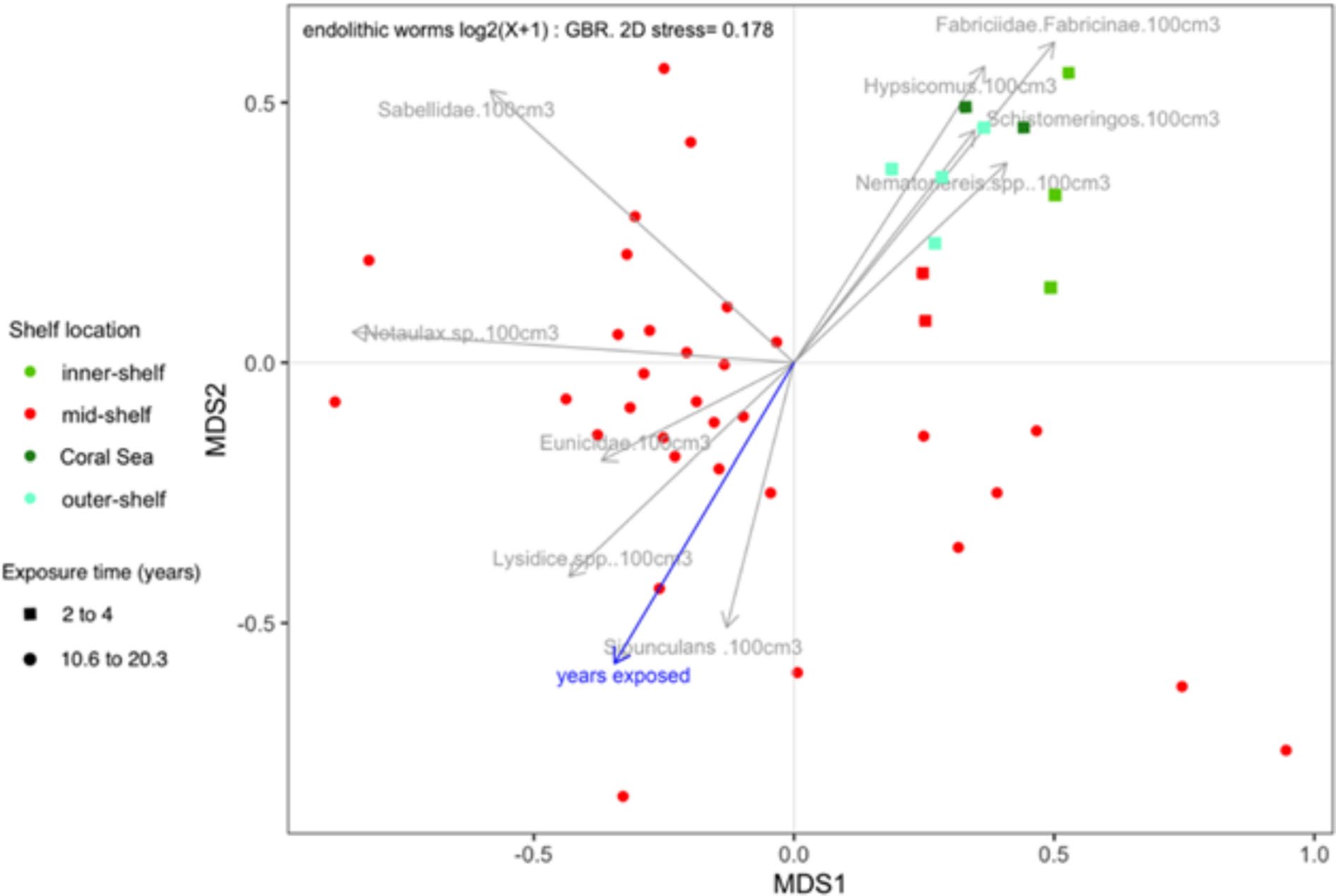
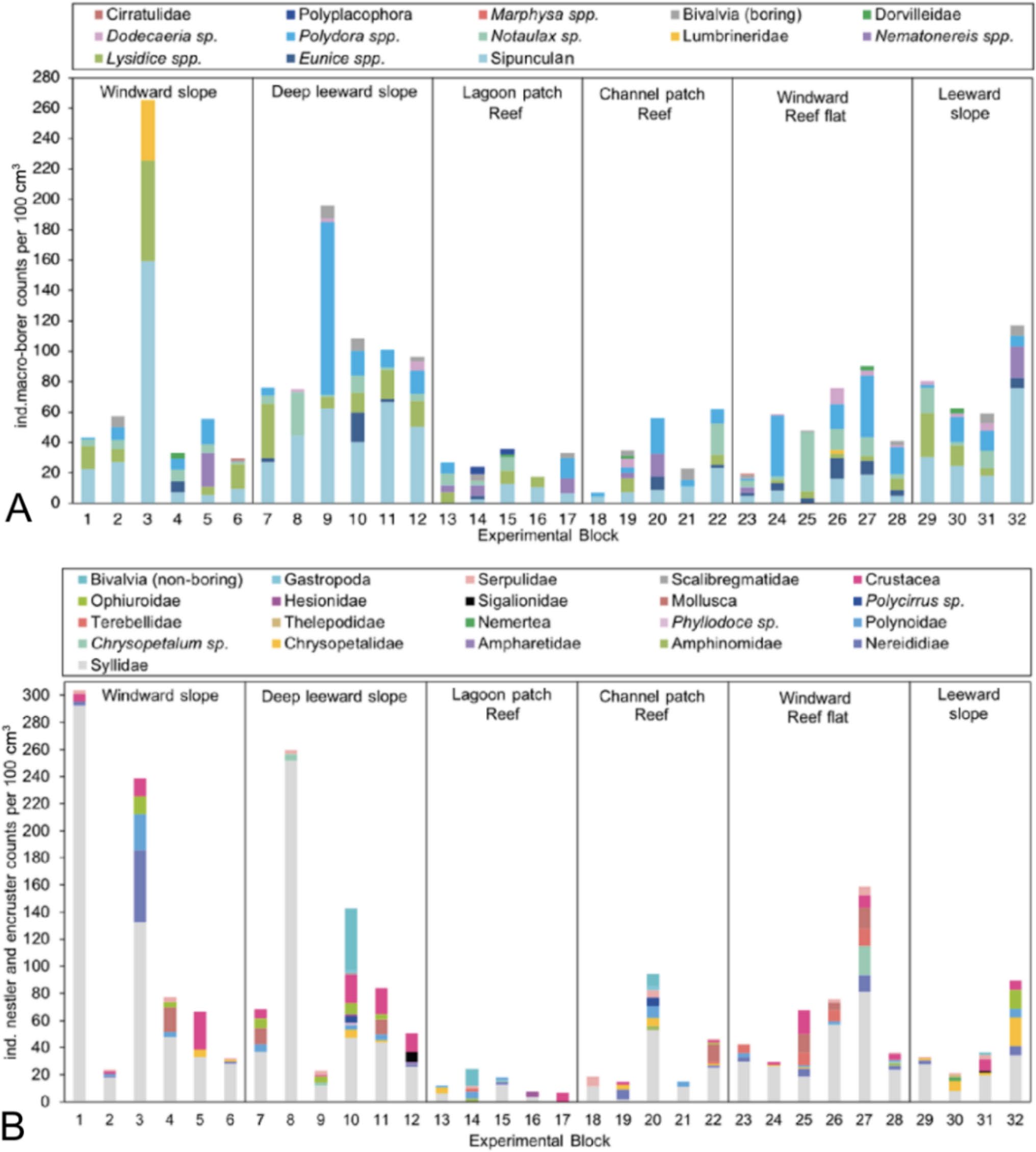
• Rich and variable endolithic communities: Worms—especially sipunculans and polychaetes—dominated internal borings, with abundances varying strongly by depth and zone.
• Rates comparable to other GBR studies: Long-term erosion rates align with previous shorter-term experiments but underscore the need for decadal datasets to capture true variability.
Why this matters
As disturbances such as bleaching, cyclones, and COTS outbreaks continue to increase the amount of exposed dead coral substrate on the GBR, understanding how quickly structural reef framework is lost becomes critical. This study provides the most robust long-term constraints to date on the balance of erosion and accretion, with direct implications for carbonate budget models, reef growth forecasting, and the future capacity of reefs to keep pace with sea-level rise.
A major contribution to reef carbonate dynamics and a testament to sustained, long-term field science.
Bravo to Madi, Pat and the rest of team!
Jody
#MarineScienceSydneyUni
 Geocoastal Research Group