
Gazi, M. Y., da Silva, A. P., Villacieros-Robineau, N., Fellowes, T. E., Salles, T., Alejo Flores, I., González-Villanueva, R., & Vila-Concejo, A. (2026). Spatial variability of wave signatures and profile morphotypes of beaches in estuaries and bays across different tidal regimes. Geomorphology. https://doi.org/10.1016/j.geomorph.2026.110208
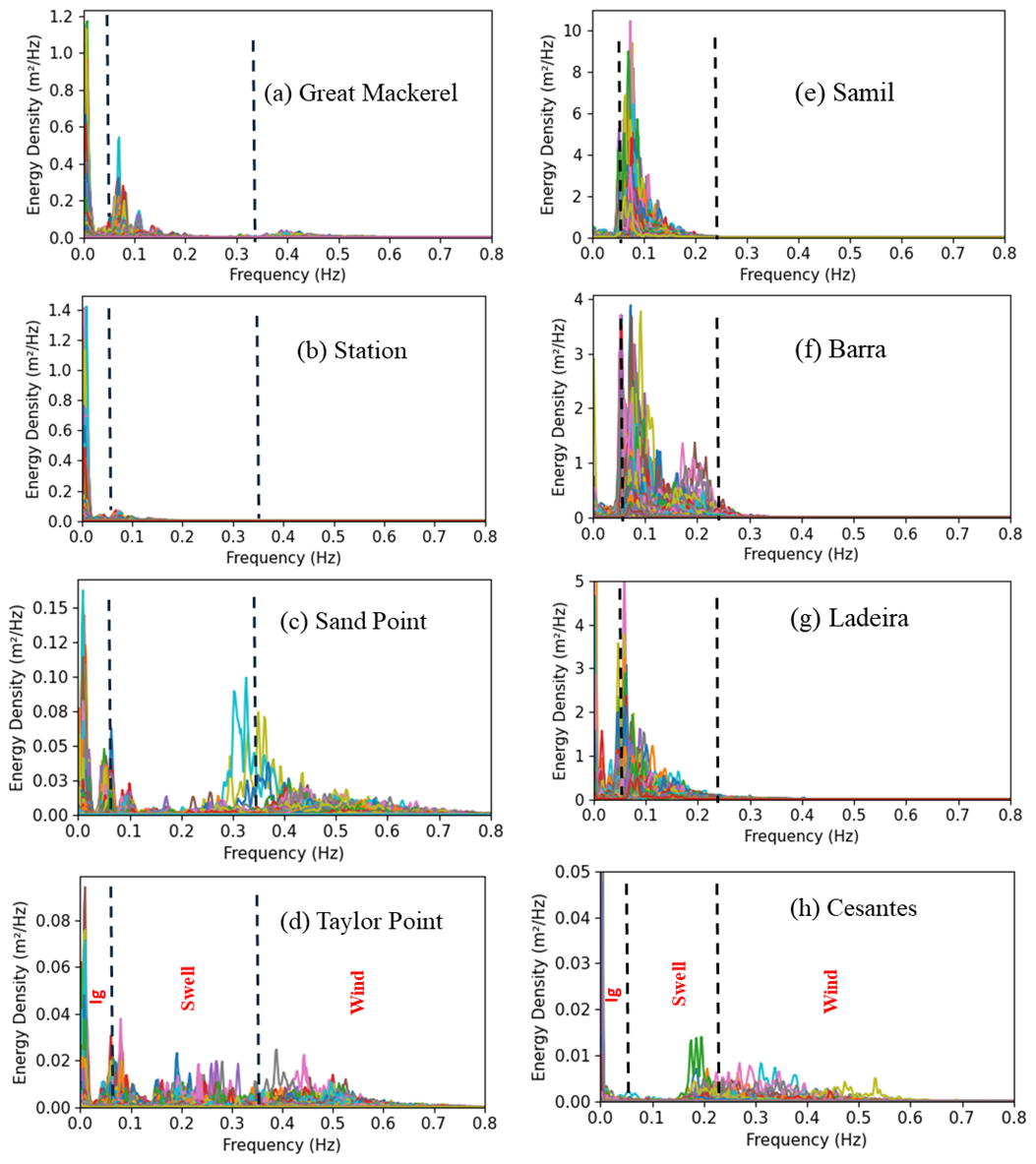
The second chapter of my PhD thesis has now been published! Beaches in Estuaries and Bays (BEBs) are often assumed to be low-energy environments shaped mostly by local winds because they are “sheltered” from the open ocean. But when we measured what waves actually reach these beaches in Pittwater (Sydney, Australia) and the Ría de Vigo (Galicia, Spain), the story changed completely. Using in-situ pressure sensors, long-term beach surveys, and sediment analysis, we separated waves into: Ocean swell waves, locally generated wind waves, and Infragravity waves.
What we found:
- In microtidal Pittwater, ~52% of wave energy came from ocean swell
- In mesotidal Ría de Vigo, ~90% of wave energy came from ocean swell
- Beaches closer to the estuary entrance receive more swell energy. Beaches further inside receive much less.
This creates a clear pattern within the same estuary:
| Near entrance | Mid-estuary | Inner estuary |
| High swell energy | Mixed wave energy | Very low swell |
| Convex profiles | Transitional | Concave profiles |
| Coarser, well-sorted sediments | Mixed sediments | Fine, poorly sorted sediments |
More swell exposure → Convex (steeper, accretional) beach profiles
Less swell exposure → Concave (flatter, erosive) beach profiles
Why tidal regime still matters
Although swell is the main driver, tidal range modifies how waves interact with the beach:
- In Pittwater (microtidal), infragravity and wind waves play a bigger secondary role
- In Ría de Vigo (mesotidal), swell dominance is even stronger, but tides influence sediment mobility and profile adjustment
 Geocoastal Research Group