
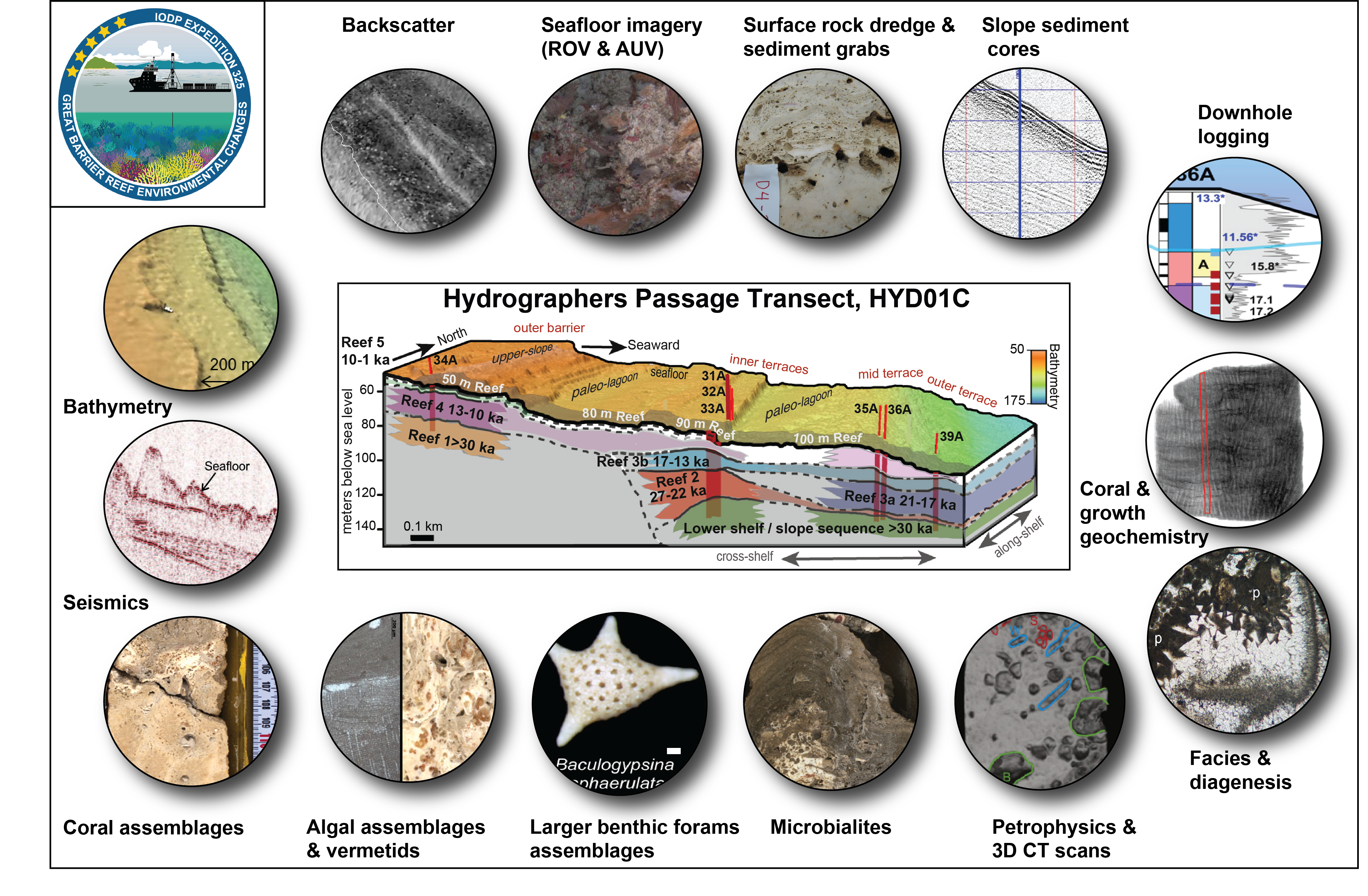
Published recently in a Special Issue of Marine Geology, this new synthesis paper brings together the major scientific discoveries from IODP Expedition 325 (Great Barrier Reef Environmental Changes).
Webster, J.M., Yokoyama, Y., Humblet, M., Braga, J.C., Felis, T., Fujita, K., Hinestrosa, G., Puga-Bernabéu, Á., Gischler, E., Thompson, A.M., 2026. Evolution of the Great Barrier Reef shelf-edge system in response to major environmental changes: a synthesis of IODP Expedition 325, Marine Geology 499, 107824. https://doi.org/10.1016/j.margeo.2026.107824. Special issue of Marine Geology entitled: ‘MSP ocean drilling’
The paper represents the culmination of almost twenty years of work spanning expedition planning, site surveys, drilling, laboratory analyses and international collaboration, all aimed at understanding how the Great Barrier Reef responded to major sea-level, climate and environmental changes over the past 30,000 years.
For me personally, this publication marks a major milestone in a scientific journey that began in the early 2000s, when we first started exploring the remarkable submerged fossil reefs preserved along the outer shelf edge of the Great Barrier Reef. These drowned reefs represented an extraordinary archive of past sea-level change, climate variability and reef evolution, but unlocking their story required a major international effort.
That effort ultimately became IODP Expedition 325 – Great Barrier Reef Environmental Changes.
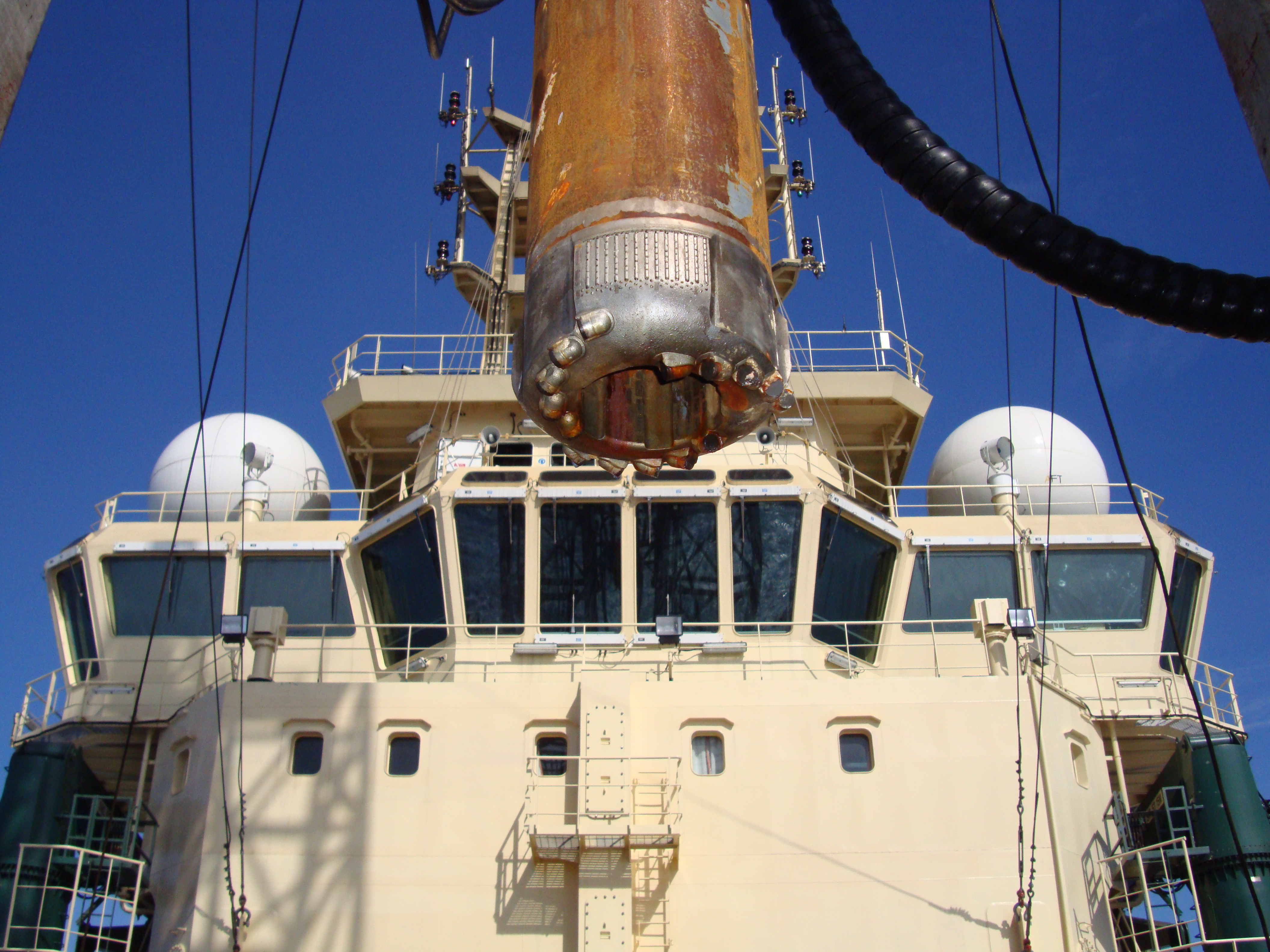
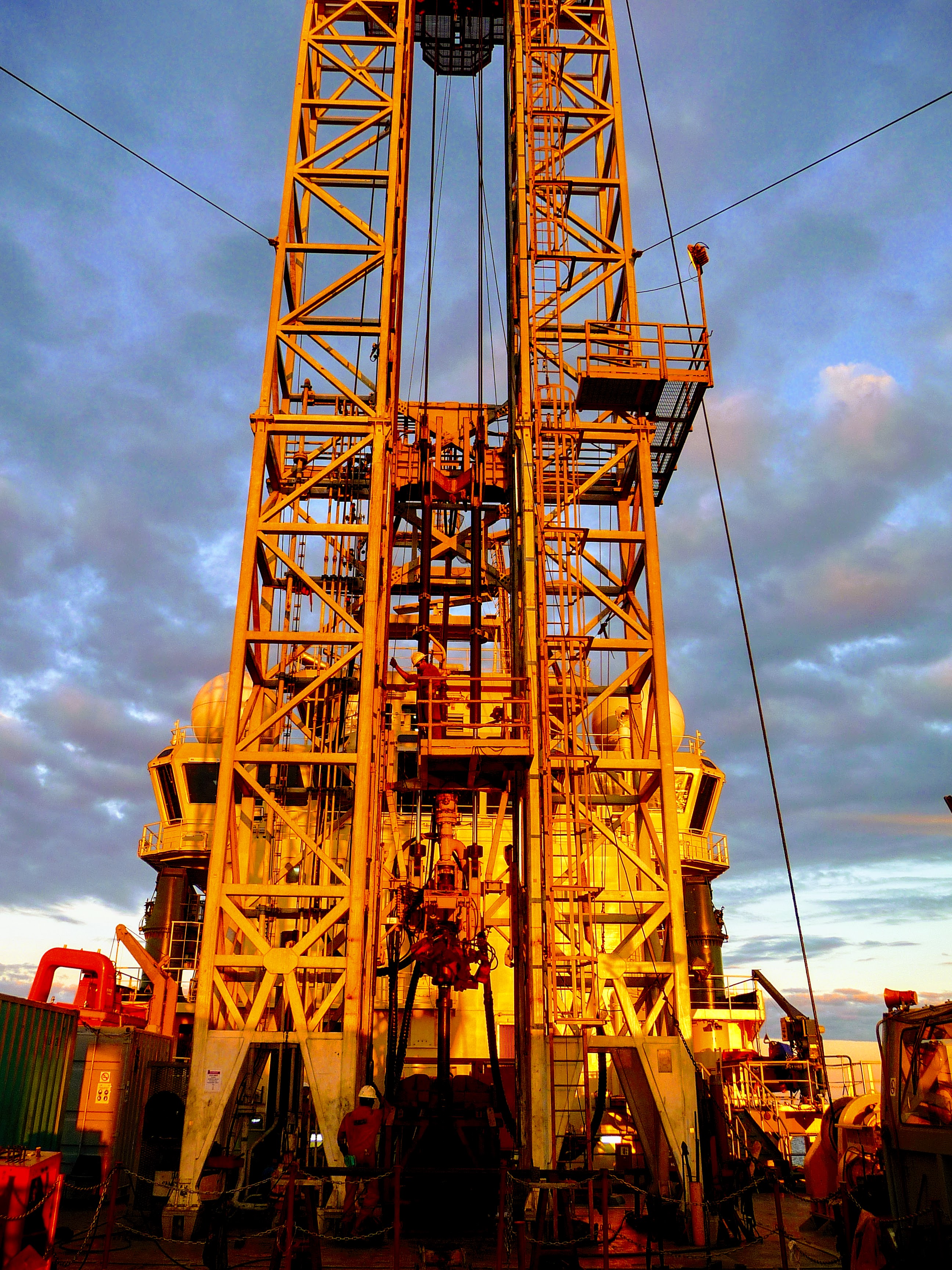
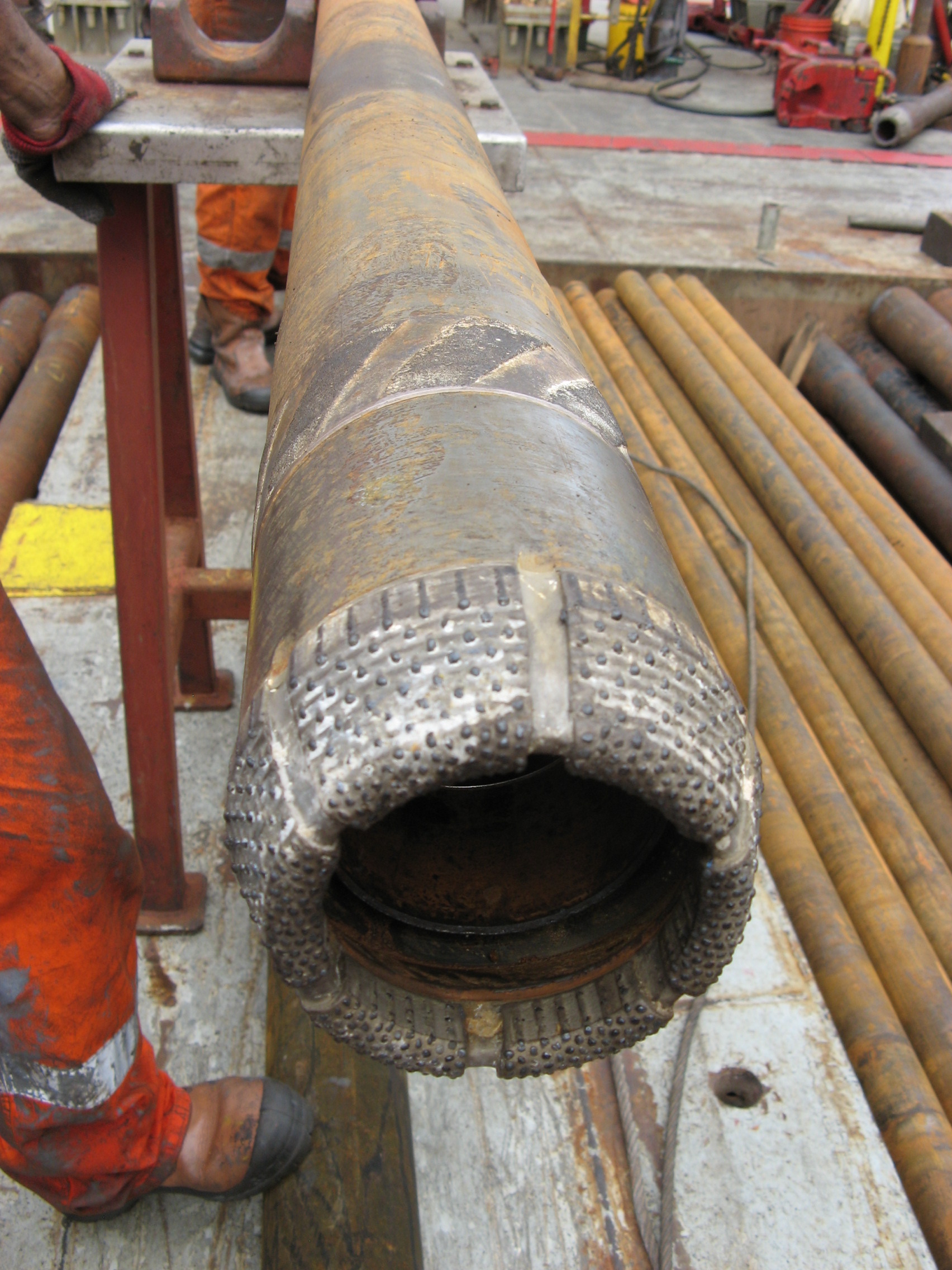
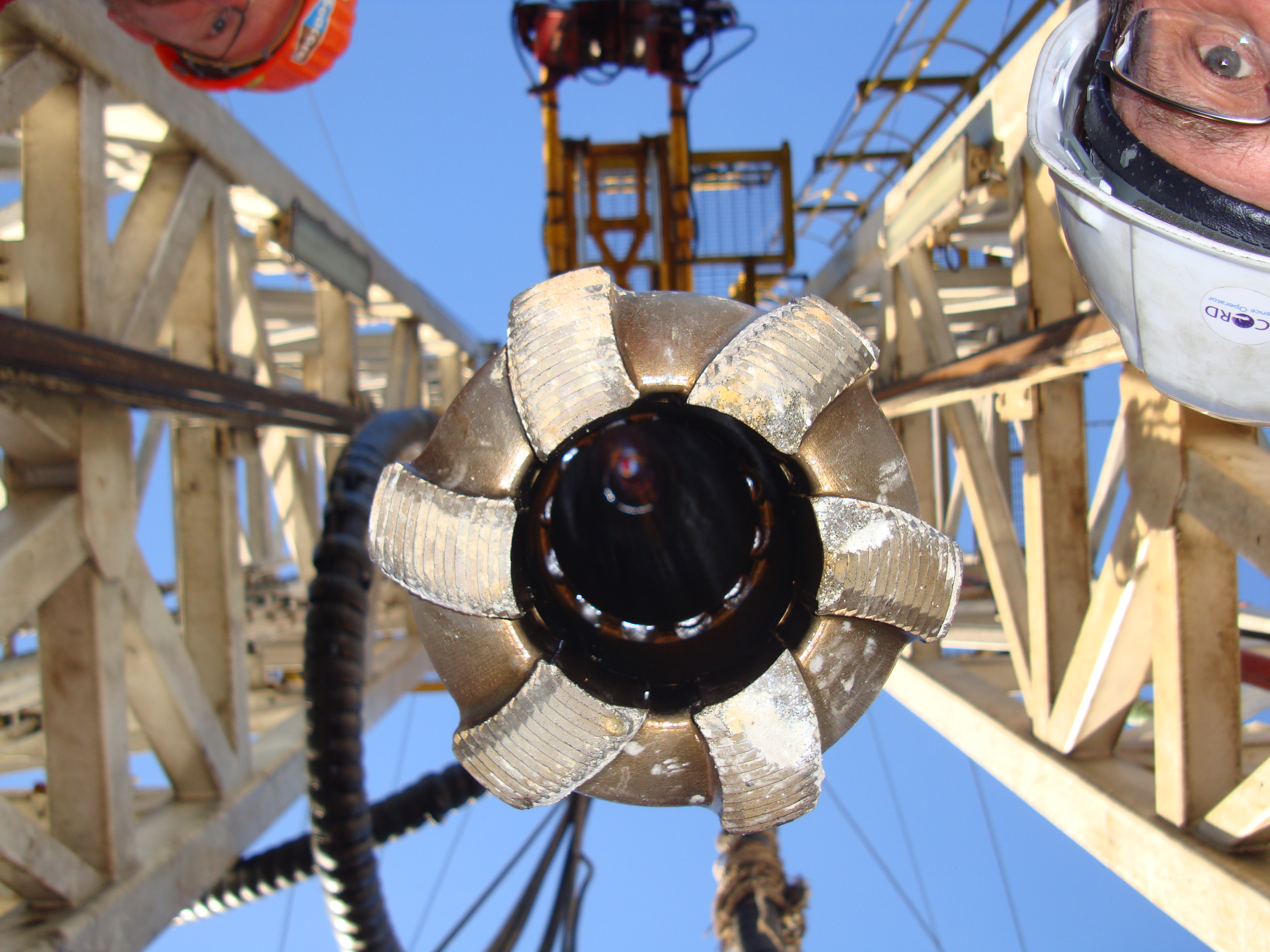
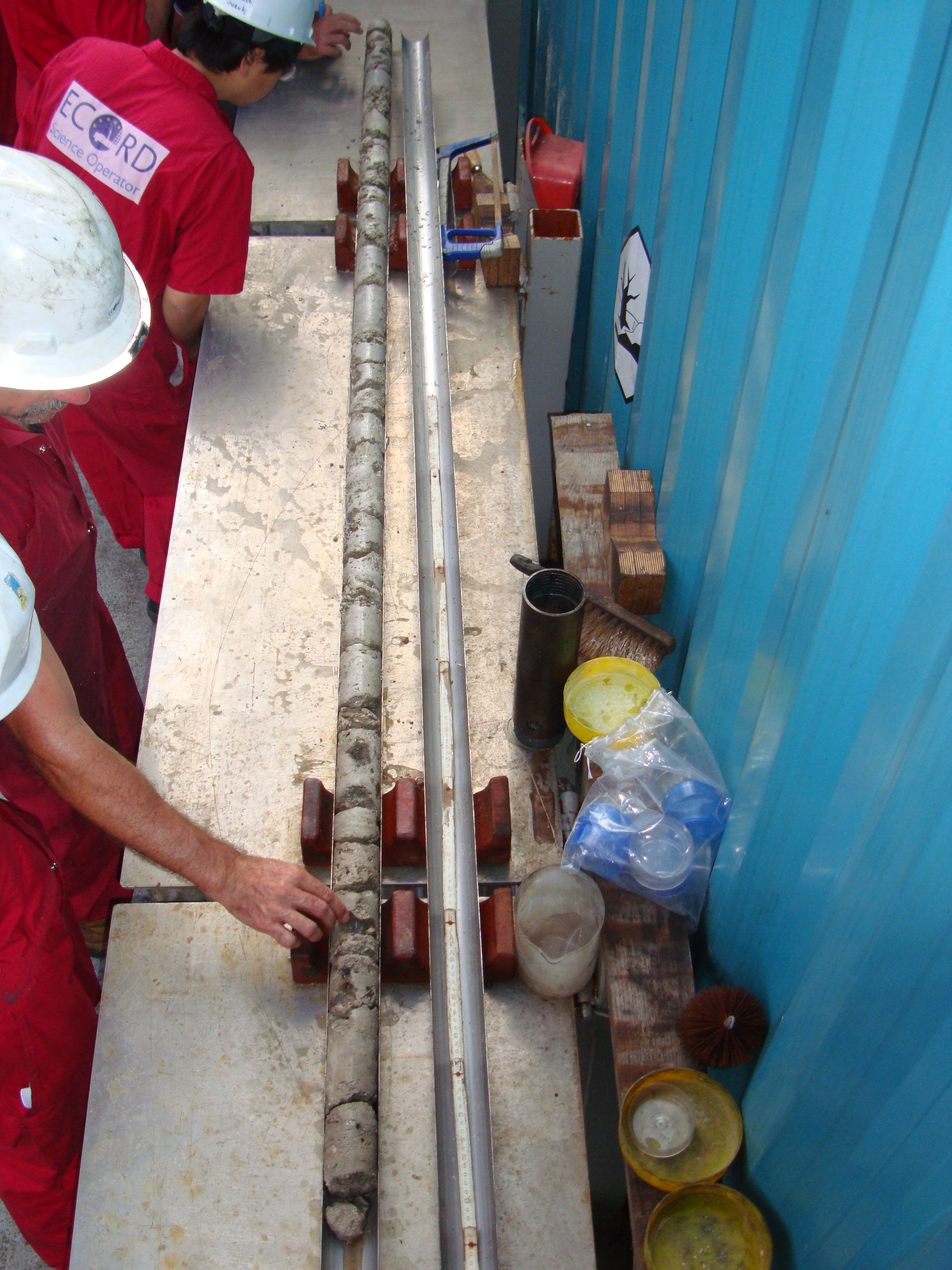
After years of planning, proposal development, site surveys, and international collaboration, Expedition 325 successfully drilled the shelf edge of the Great Barrier Reef in 2010. Apart from being an incredibly exciting and eventful voyage (ie. equipment failures, engine fires and cyclones!), it was also a particularly special period in my personal life, as my partner was expecting our first daughter while we were offshore😊.
Recovering those cores was only the beginning. Over the following fifteen years, a large team of researchers from around the world analysed the expedition material using a wide range of approaches, including geochronology, surface and subsurface reef geomorphology, sedimentology, numerical modelling, paleoecology, geochemistry and climate proxy reconstruction.
This resulted in more than fifty scientific papers, many research student projects and a vastly improved understanding of how the Great Barrier Reef responded to major environmental perturbations during the last glacial cycle. This new synthesis paper represents our first attempt to bring all those findings together into a single coherent framework.
Key Scientific Highlights
The synthesis reveals several major advances in our understanding of reef evolution and environmental change over the last 30,000 years:
- New constraints on past sea-level change, including the timing, magnitude and structure of sea-level fall into the Last Glacial Maximum and the subsequent deglacial rise.
- Improved understanding of rapid meltwater pulse events, helping refine global reconstructions of ice-sheet collapse and sea-level rise.
- Reconstruction of past sea-surface temperatures from fossil corals, providing new insights into climate variability during the last deglaciation.
- Evidence for major changes in regional oceanography, including shifts in the strength and influence of the East Australian Current (EAC).
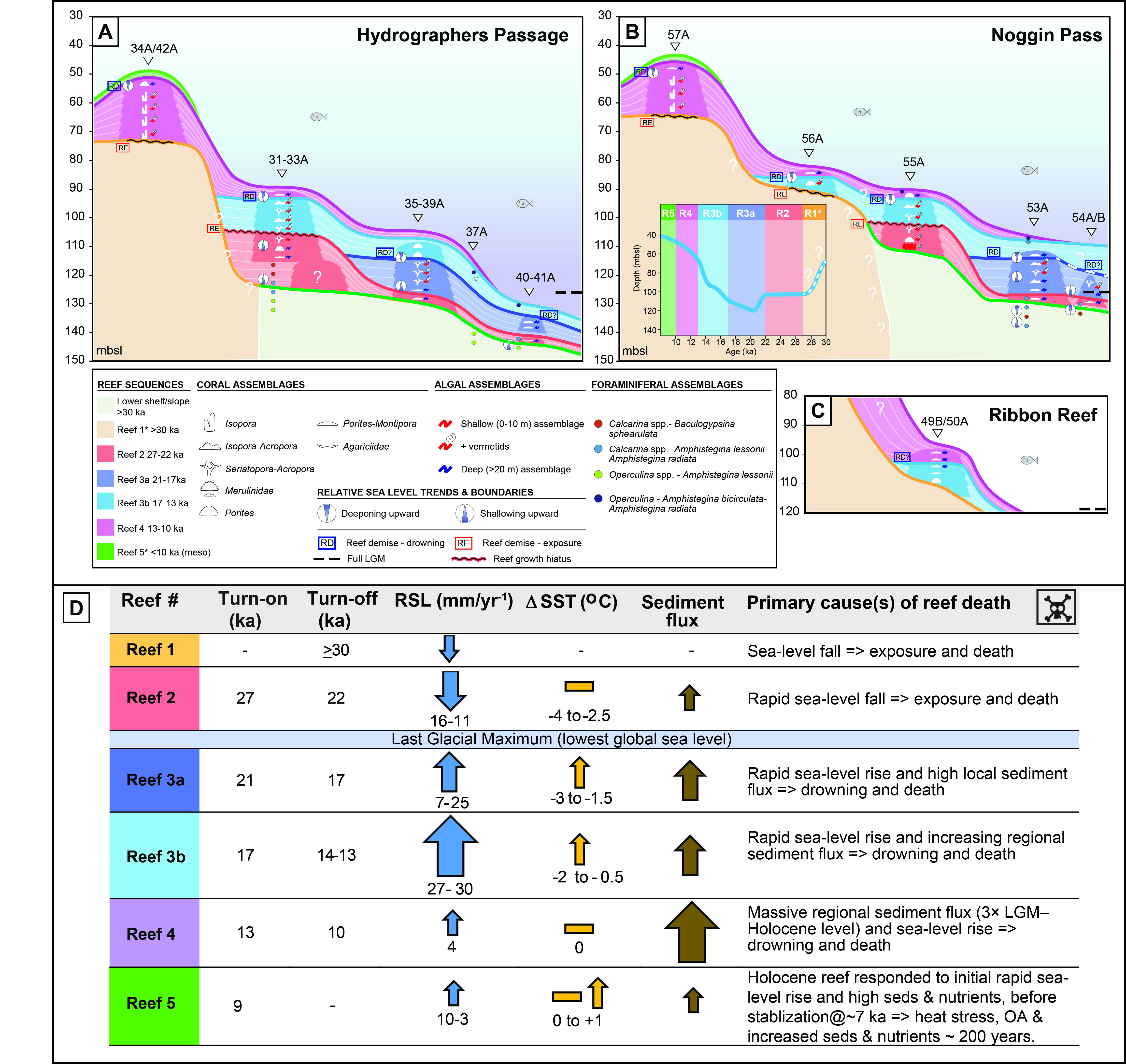
- Identification of five distinct phases of reef growth and demise, revealing how reefs repeatedly initiated, migrated, expanded and drowned in response to environmental changes.
- Recognition of strong connectivity between shallow and mesophotic reef ecosystems, allowing reef communities to rapidly track changing sea levels across the shelf edge.
- Development of the first integrated evolutionary model for the shelf-edge Great Barrier Reef, bringing together geomorphic, paleoecological, sedimentological and geochemical records from multiple transects distributed over 700 km along the margin.
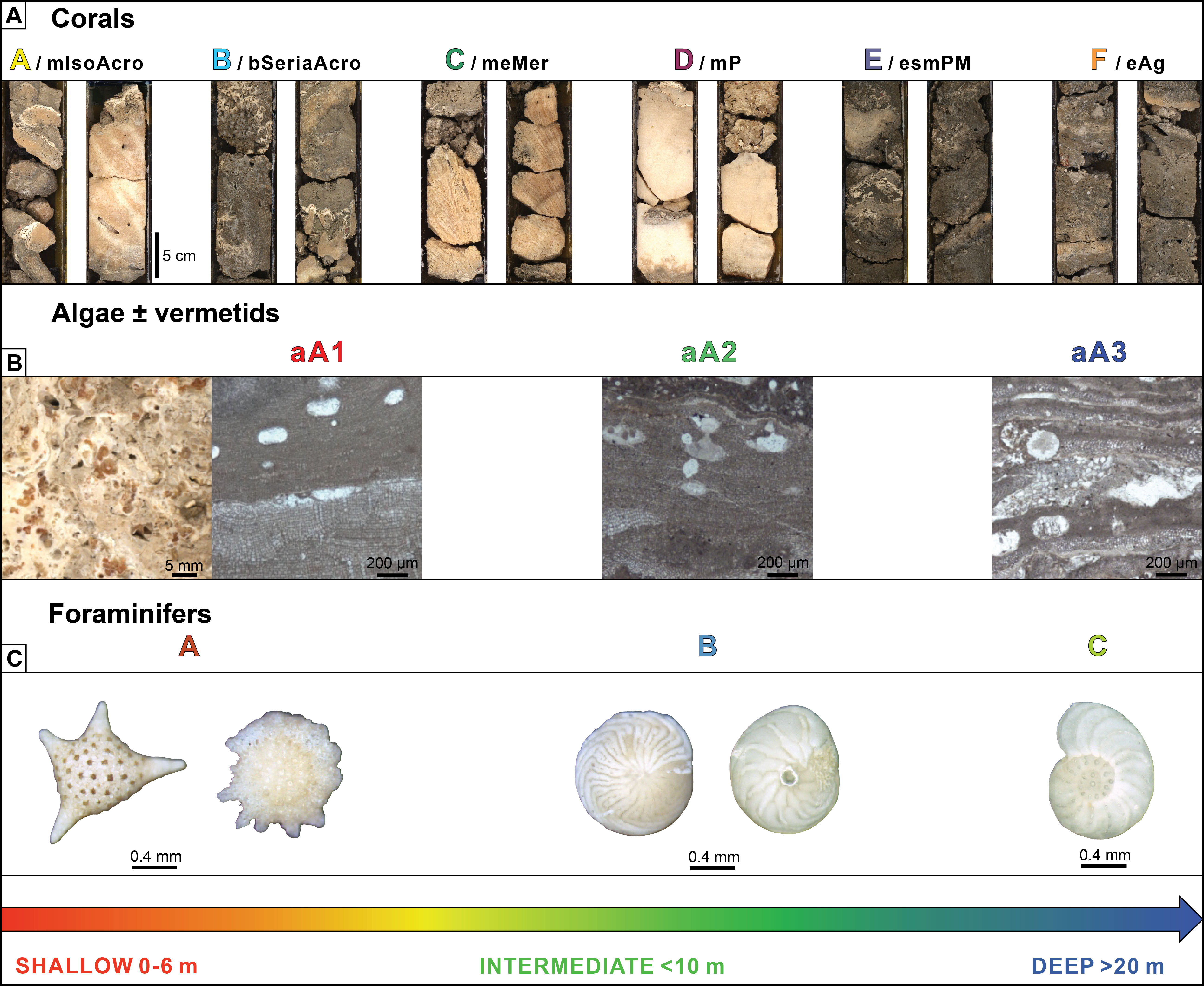
Perhaps most importantly, the synthesis reveals just how dynamic the Great Barrier Reef has been through time. As sea level fell during the last glaciation, reefs migrated seaward across the continental shelf. As sea level rose during deglaciation, reef systems repeatedly shifted landward, tracking suitable environmental conditions. The reefs thrived and expanded at times, before ultimately drowning when rates of sea-level rise and associated environmental changes (e.g. high sediment and nutrient input) compromised their capacity to keep pace. Leading finally to the turn-on of the modern Great Barrier Reef as we know it.
These findings provide one of the most detailed records anywhere in the world of how coral reef ecosystems responded to rapid environmental change and offer valuable context for understanding the challenges facing modern reefs today.
Looking back, one of the most rewarding aspects of this project has been the incredible collaboration that made it possible. Expedition 325 involved scientists, technicians, students, drilling specialists and support staff from many countries, all working toward a common goal of understanding the past evolution of one of Earth’s most iconic reef systems.
I am enormously proud of what the expedition has achieved and grateful to the shipboard team, IODP, ESO and ANZIC, along with the many colleagues, students and collaborators who contributed over the years. This paper is not only a synthesis of scientific results; it is also a celebration of the collective effort to generate one of the most comprehensive records of environmental change ever recovered from the Great Barrier Reef.
While this publication represents an important milestone, it is certainly not the end of the story. The Expedition 325 archive continues to generate new questions and new opportunities for discovery, ensuring that its scientific legacy will continue for many years to come through IODP3 – the next phase of this wonderful program. For me, one of the most exciting developments is seeing many of these scientific questions now being explored through IODP Expedition 389 (Hawaiian Drowned Reefs). With research from that expedition now gaining momentum, we are entering a new phase of discovery that promises fresh insights into reef evolution, sea-level change and climate variability across the Pacific.
Cheers
Jody
#MarineScienceSydneyUni


Pingback: Hot off the Press! Tiny fossils reveal a major sea-level fall into the Last Glacial Maximum – Geocoastal Research Group·