Please join me in congratulating Prof. Kazuhiko Fujita and colleagues on their new paper in Earth and Planetary Science Letters, which uses fossil foraminifera recovered during IODP Expedition 325 Great Barrier Reef Environmental Changes to reconstruct global mean sea level from late Marine Isotope Stage 3 into the Last Glacial Maximum.
Fujita, K., Nakada, C., Yagioka, N., Miyairi, Y., Humblet, M., Kan, H., Iryu, Y., Webster, J. M. & Yokoyama, Y. 2026. Global mean sea-level fall from late Marine Isotope Stage 3 into the Last Glacial Maximum inferred from Great Barrier Reef large benthic foraminiferal assemblages. Earth and Planetary Science Letters 696, 120379. https://doi.org/10.1016/j.epsl.2026.120379
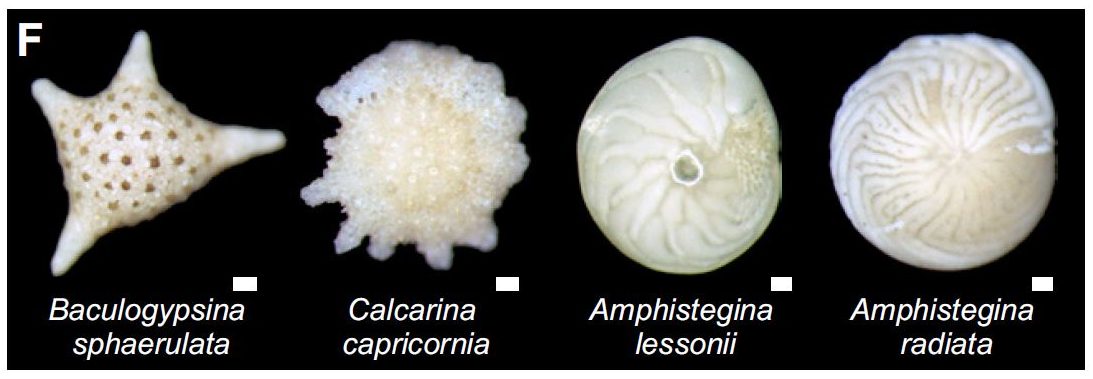
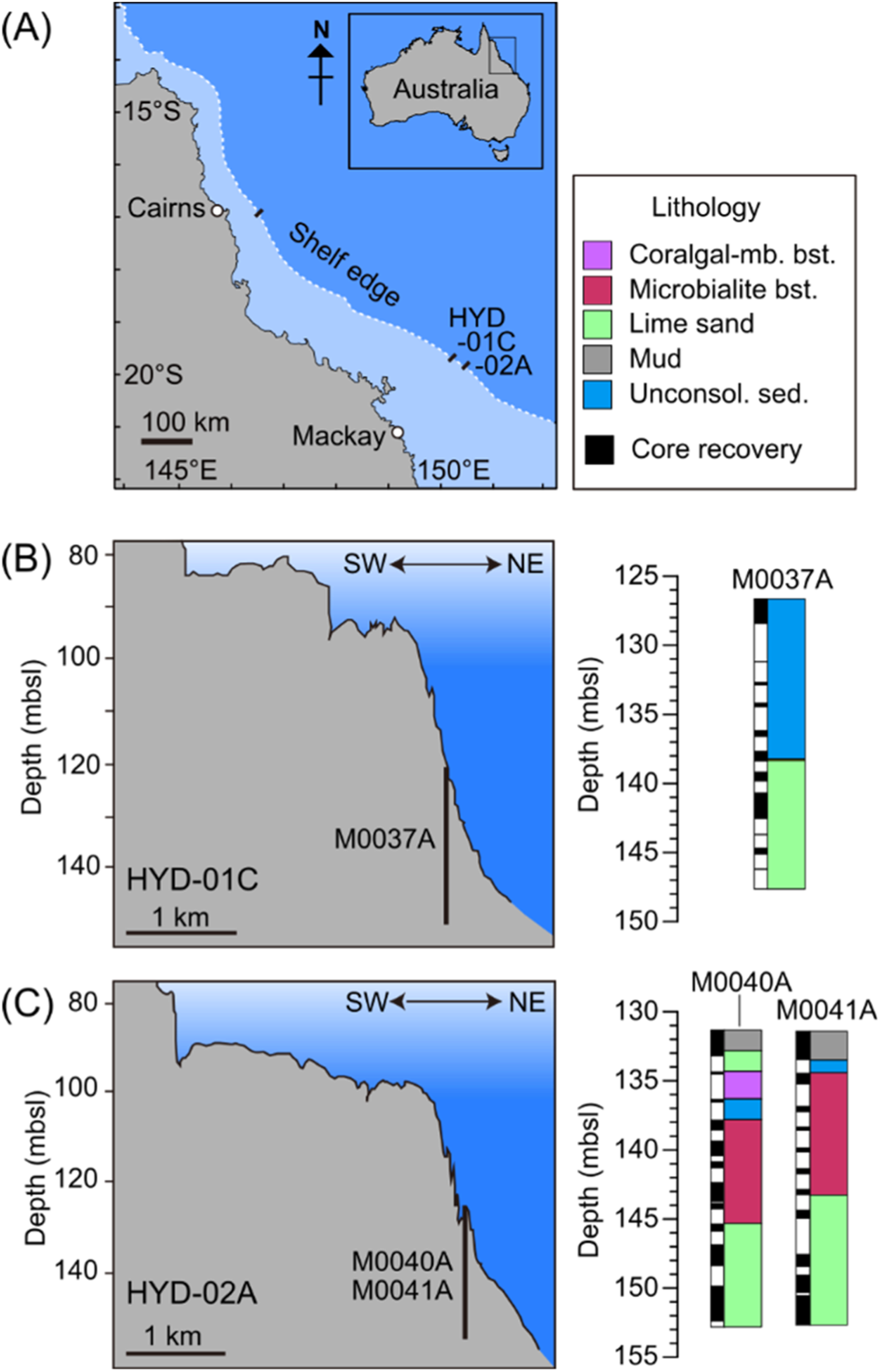
The study examined large benthic foraminifera preserved in upper-slope sediment cores from Hydrographers Passage on the Great Barrier Reef, recovered during Expedition 325. These tiny fossils are particularly useful because different species occupy characteristic water depths, allowing their assemblages to be used as biological indicators of past sea level.
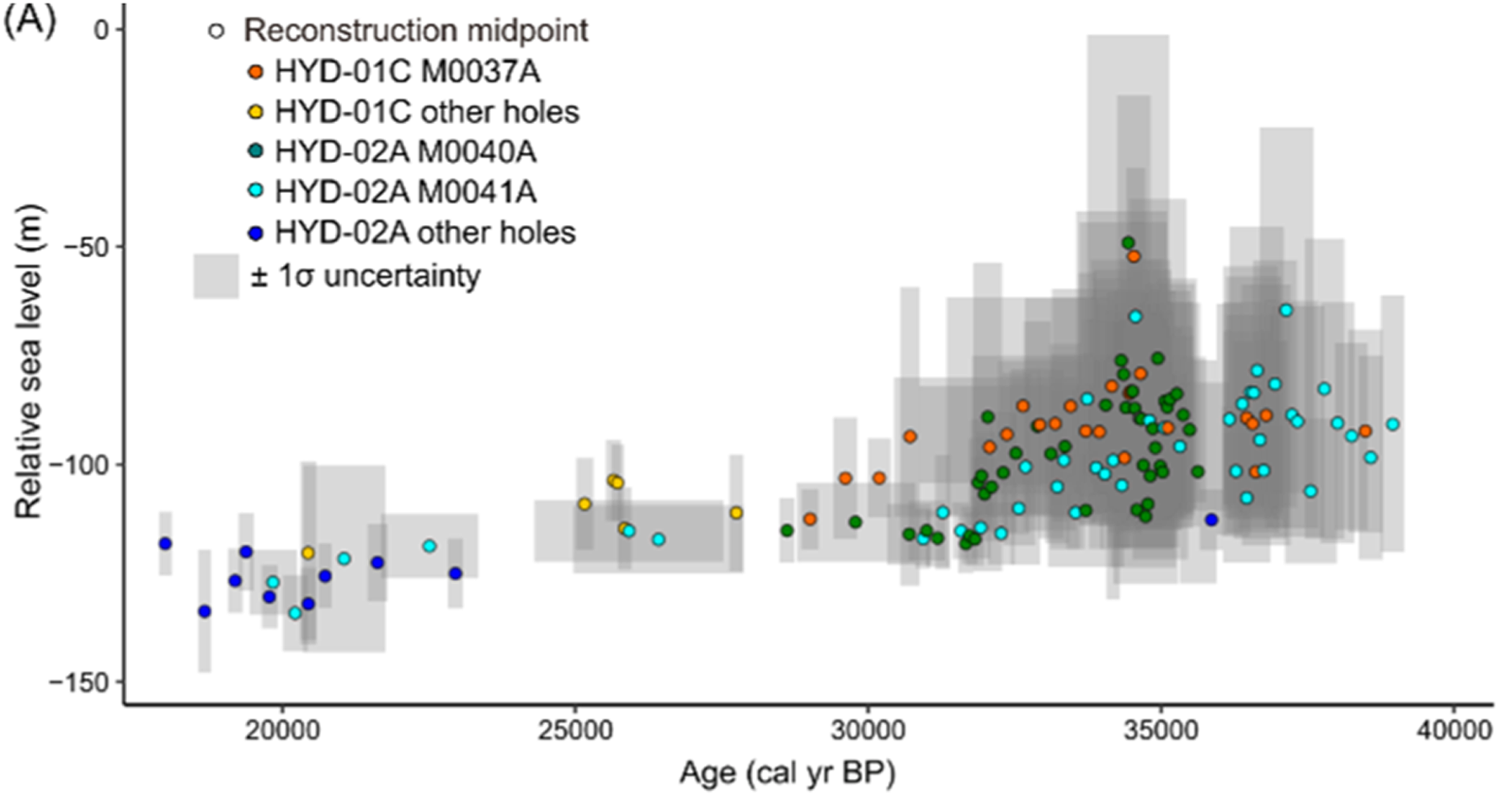
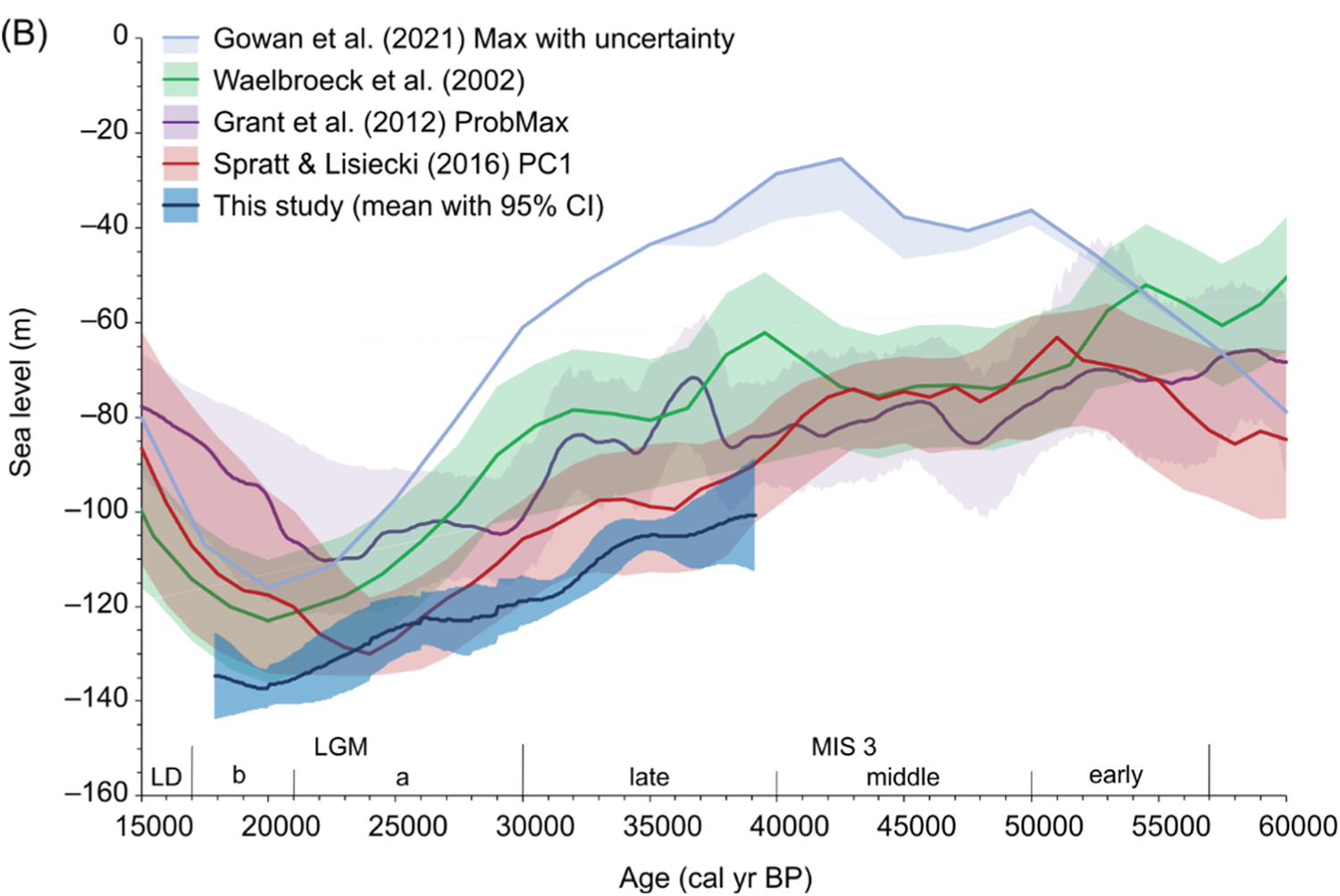
Using Bayesian modelling, radiocarbon chronology and corrections for glacial-isostatic effects, the team reconstructed global mean sea level between approximately 39,000 and 18,000 years ago.
The key findings include:
- Late MIS 3 global mean sea level decreased from about 101 m below present at ~39 ka to about 119 m below present at ~30 ka.
- A relatively steep ~17 m fall in global mean sea level occurred between ~35 and 28 ka, suggesting that large-scale ice-sheet advance into the Last Glacial Maximum accelerated over this ~7,000-year interval.
- Global mean sea level subsequently reached about 137 m below present at ~19 ka during the Last Glacial Maximum.
- The foraminifera-based reconstruction is likely smoother and lower than previous global mean sea-level records and probably reflects long-term mean trends, whereas coralgal records may capture finer-scale and more rapid sea-level excursions.
The work provides an important new perspective on how the world’s ice sheets expanded into the Last Glacial Maximum and demonstrates that the legacy of IODP Expedition 325 continues to reveal new information. The expedition drilled fossil reefs along the Great Barrier Reef shelf edge to investigate sea-level, climate and reef responses to major environmental change. See the recent comprehensive synthesis paper for more highlights.
Congratulations to Kazu and the international team — another great example of what can still be extracted from these remarkable Great Barrier Reef cores. More to follow soon, so watch this space.
Cheers
Jody
#MarineScienceSydneyUni